

/
Making skin health accessible for all: unveiling the challenges in diagnosing skin conditions on darker skin
UK adults opt-in for the Covid-19 vaccine, but only 44% plan to vaccinate their children
November 26, 2020
The skin is the largest organ of the human body and acts as a protective barrier between the external environment and the inside of the body, shielding the internal organs against heat, light, injury and infection. Yet, the journey to diagnose skin conditions, especially on darker skin tones, can be challenging and not well mapped. In a recent study, physicians were presented with 364 images spanning 46 skin diseases and asked to submit up to four differential diagnoses. The physicians were four percentage points less accurate for the diagnosis of images of dark skin as compared to light skin.
Inherent biases deeply rooted in medical research, literature, and education have led to a healthcare landscape skewed towards lighter skin, often leaving behind those with darker complexions. Doctors diagnose around one-quarter of melanoma cases in Black people when cancer has already spread to nearby lymph nodes. However, amidst these challenges, there are technological advancements, such as AI, that are helping to rectify this imbalance. In May 2024, Autoderm conducted a total of 18,359 analyses through the myGP app and identified 79 cases of melanoma. This equates to about 2-3 melanoma diagnoses per day. Given that approximately 46 melanomas are diagnosed daily across the UK, the cases detected via the myGP app represent about 5% of the total daily melanoma diagnoses in the UK population.
We recognise the need for equitable healthcare solutions for all. Through our partnership with Autoderm, launched in 2023 after years of clinical and AI research, are proud to offer their next generation skin scanner to our community of 3 million users via the myGP app.
The bias in dermatology towards lighter skin tones is a well-documented issue. From medical textbooks to research studies, most visual references and diagnostic criteria are based on observations of mainly fair-skinned individuals.This bias perpetuates a cycle of misdiagnosis and inadequate treatment for patients with darker skin, which can lead to unnecessary distress and prolonged health issues such as increased itching, dryness, skin thickening and hyperpigmentation.
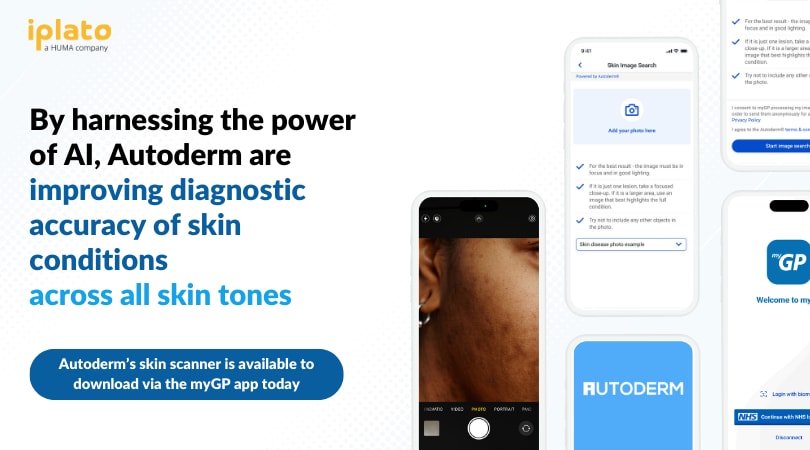
Autoderm and the myGP app, however, are changing the game! By harnessing the power of AI, Autoderm helps improve diagnostic accuracy of skin conditions across all skin tones. Their approach analyses a diverse search engine of skin images (2 million+), encompassing various ethnicities and skin tones. Their algorithm is constantly evolving and learning along with their growing bank of images. Irrespective of skin tone, myGP users can use the tech to get likely answers quickly, easily and choose how to act on the insight.


© 2026 iPLATO. All rights reserved
Practice Area
/
Making skin health accessible for all: unveiling the challenges in diagnosing skin conditions on darker skin
UK adults opt-in for the Covid-19 vaccine, but only 44% plan to vaccinate their children
November 26, 2020
The skin is the largest organ of the human body and acts as a protective barrier between the external environment and the inside of the body, shielding the internal organs against heat, light, injury and infection. Yet, the journey to diagnose skin conditions, especially on darker skin tones, can be challenging and not well mapped. In a recent study, physicians were presented with 364 images spanning 46 skin diseases and asked to submit up to four differential diagnoses. The physicians were four percentage points less accurate for the diagnosis of images of dark skin as compared to light skin.
Inherent biases deeply rooted in medical research, literature, and education have led to a healthcare landscape skewed towards lighter skin, often leaving behind those with darker complexions. Doctors diagnose around one-quarter of melanoma cases in Black people when cancer has already spread to nearby lymph nodes. However, amidst these challenges, there are technological advancements, such as AI, that are helping to rectify this imbalance. In May 2024, Autoderm conducted a total of 18,359 analyses through the myGP app and identified 79 cases of melanoma. This equates to about 2-3 melanoma diagnoses per day. Given that approximately 46 melanomas are diagnosed daily across the UK, the cases detected via the myGP app represent about 5% of the total daily melanoma diagnoses in the UK population.
We recognise the need for equitable healthcare solutions for all. Through our partnership with Autoderm, launched in 2023 after years of clinical and AI research, are proud to offer their next generation skin scanner to our community of 3 million users via the myGP app.
The bias in dermatology towards lighter skin tones is a well-documented issue. From medical textbooks to research studies, most visual references and diagnostic criteria are based on observations of mainly fair-skinned individuals.This bias perpetuates a cycle of misdiagnosis and inadequate treatment for patients with darker skin, which can lead to unnecessary distress and prolonged health issues such as increased itching, dryness, skin thickening and hyperpigmentation.
Autoderm and the myGP app, however, are changing the game! By harnessing the power of AI, Autoderm helps improve diagnostic accuracy of skin conditions across all skin tones. Their approach analyses a diverse search engine of skin images (2 million+), encompassing various ethnicities and skin tones. Their algorithm is constantly evolving and learning along with their growing bank of images. Irrespective of skin tone, myGP users can use the tech to get likely answers quickly, easily and choose how to act on the insight.
© 2026 iPLATO. All rights reserved
UK adults opt-in for the Covid-19 vaccine, but only 44% plan to vaccinate their children
November 26, 2020
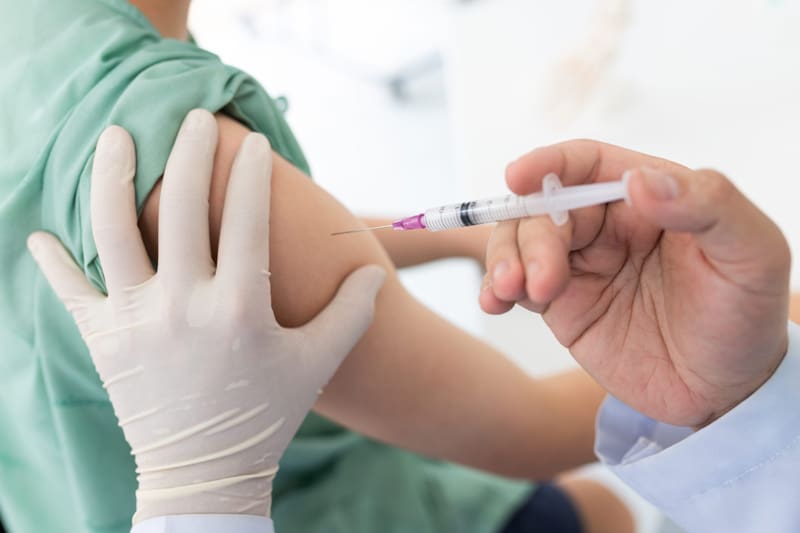
With news of a Covid-19 vaccine being available in the UK by the end of the year, the UK’s largest appointment booking and healthcare management app, ‘myGP’, has revealed that 78 percent of the UK’s adult population are opting to have the vaccination, as soon as it is available.
Being home to over two million NHS patients who book their GP appointments and manage their health via the app, the company decided to undertake the study, which has revealed that almost four in five adults (78%) are planning to have the Covid-19 vaccine once it’s available, with a lower 44 percent of parents planning to put their children forward to do the same.
In terms of age, unsurprisingly it’s older generations who are most open to receiving the Covid-19 vaccine, with 86 percent of over-55s willing to have it done, and rising to nine in 10 (90 percent) for over-65s.
To explore the intentions of parents who aren’t planning to vaccinate their children, myGP delved deeper with a further poll of 180 UK parents, which revealed the main reasons for parents shunning the Covid-19 vaccine. When asked why they wouldn’t vaccinate their children, the main reason given by most parents (60%) was the speed at which the impending vaccination had been delivered.
The second biggest reason, which almost a quarter of parents gave, was that they didn’t consider their children being ‘high risk’ enough to require a vaccine, following widespread reports that most young people without underlying health issues do not experience complications after contracting Covid-19.
A more confident 11 percent of parents would prefer their children to catch Covid-19, so they can effectively build-up valuable antibodies to protect themselves in the future.
Interestingly, the MMR vaccine and Autism debate appears to have taken a back seat during parents’ decision making around the latest vaccine, with only 3 percent of parents referencing it as a barrier.
Top 5 reasons preventing parents from vaccinating their children against Covid-19:
• The Covid-19 vaccine has been developed too quickly – 60%
• Children are not high risk enough to need a vaccine against Covid-19 – 24%
• I’d prefer for my child to get the antibodies naturally – 11%
• Concerns around side-effects (MMR & autism debate) – 3%
• My child(ren) can decide if they want the vaccine when they are old enough – 2%
Dr Harriet Leyland, myGP’s Clinical Advisor, comments on the importance of effective communication for patients eligible for the vaccine, for a successful rollout:
“It’s encouraging to see such a large majority of UK adults planning to have the vaccine when it’s available to them. The roll-out will start with elderly care home patients and all medical staff, followed by patient groups based on age – with the eldest coming first. NHS GPs are positive about the rollout and are gearing up to deliver the vaccines. It’s an exciting step in the right direction, for all.
“It’s important now for us all to remain patient, and ensure we watch out for updates regarding when we are eligible for a vaccine. The UK media will share general updates on what is happening and when, and GP practices will communicate with patients directly as and when the vaccine is available.
“With the vaccine coming in two doses set three weeks apart, it’s really important that patients remember to return for the second dose – digital reminders via a Smartphone will play a major part in this process. Today over two million NHS patients book appointments and manage their health via the myGP app, who will receive a push notification or text message when their Covid-19 vaccine is available – everyone can access this service, for free.”
Dr Yasmin Razak, Clinical Director of the Neohealth Primary Care Network and a working GP and mum comments on parents’ decisions regarding vaccinating their children:
“Naturally, we are always more cautious when it comes to our children’s health, over our own, so the lower percentage of parents planning to vaccinate their children is no real surprise.
“The reasons given by parents who aren’t planning to vaccinate their children echo the comments I am hearing from parents I meet in the practice. Every parent has a choice, and the closer we get to a vaccine being available, clearer advice for parents will become available – this advice will enable us to identify if our children are at greater risk of complications should they contract Covid-19, and therefore will enable parents to make the right decision.
“I would urge parents to keep an open mind until more information is available, and when it is available, to trust the experts’ advice.”
All NHS patients can get a direct line with their GP practice by downloading the NHS-approved myGP app for free today at www.mygp.com.
© 2026 iPLATO. All rights reserved