
/
Making skin health accessible for all: unveiling the challenges in diagnosing skin conditions on darker skin
Round table evening with HealthXL
March 28, 2024
The skin is the largest organ of the human body and acts as a protective barrier between the external environment and the inside of the body, shielding the internal organs against heat, light, injury and infection. Yet, the journey to diagnose skin conditions, especially on darker skin tones, can be challenging and not well mapped. In a recent study, physicians were presented with 364 images spanning 46 skin diseases and asked to submit up to four differential diagnoses. The physicians were four percentage points less accurate for the diagnosis of images of dark skin as compared to light skin.
Inherent biases deeply rooted in medical research, literature, and education have led to a healthcare landscape skewed towards lighter skin, often leaving behind those with darker complexions. Doctors diagnose around one-quarter of melanoma cases in Black people when cancer has already spread to nearby lymph nodes. However, amidst these challenges, there are technological advancements, such as AI, that are helping to rectify this imbalance. In May 2024, Autoderm conducted a total of 18,359 analyses through the myGP app and identified 79 cases of melanoma. This equates to about 2-3 melanoma diagnoses per day. Given that approximately 46 melanomas are diagnosed daily across the UK, the cases detected via the myGP app represent about 5% of the total daily melanoma diagnoses in the UK population.
We recognise the need for equitable healthcare solutions for all. Through our partnership with Autoderm, launched in 2023 after years of clinical and AI research, are proud to offer their next generation skin scanner to our community of 3 million users via the myGP app.
The bias in dermatology towards lighter skin tones is a well-documented issue. From medical textbooks to research studies, most visual references and diagnostic criteria are based on observations of mainly fair-skinned individuals.This bias perpetuates a cycle of misdiagnosis and inadequate treatment for patients with darker skin, which can lead to unnecessary distress and prolonged health issues such as increased itching, dryness, skin thickening and hyperpigmentation.
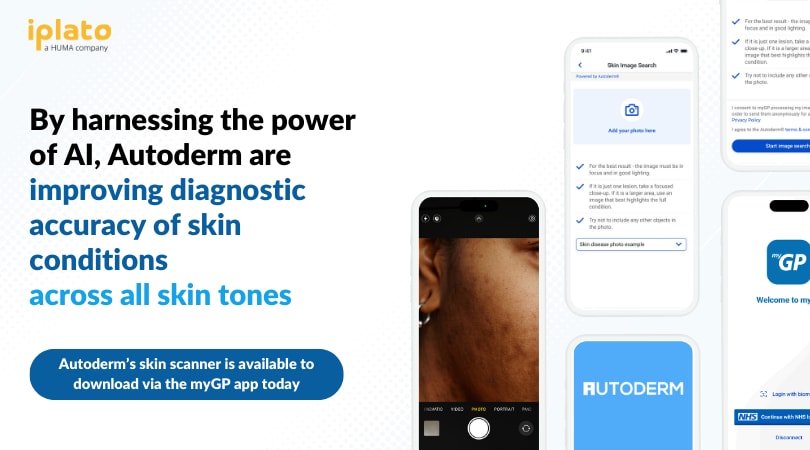
Autoderm and the myGP app, however, are changing the game! By harnessing the power of AI, Autoderm helps improve diagnostic accuracy of skin conditions across all skin tones. Their approach analyses a diverse search engine of skin images (2 million+), encompassing various ethnicities and skin tones. Their algorithm is constantly evolving and learning along with their growing bank of images. Irrespective of skin tone, myGP users can use the tech to get likely answers quickly, easily and choose how to act on the insight.


© 2026 iPLATO. All rights reserved
Practice Area
/
Making skin health accessible for all: unveiling the challenges in diagnosing skin conditions on darker skin
Round table evening with HealthXL
March 28, 2024
The skin is the largest organ of the human body and acts as a protective barrier between the external environment and the inside of the body, shielding the internal organs against heat, light, injury and infection. Yet, the journey to diagnose skin conditions, especially on darker skin tones, can be challenging and not well mapped. In a recent study, physicians were presented with 364 images spanning 46 skin diseases and asked to submit up to four differential diagnoses. The physicians were four percentage points less accurate for the diagnosis of images of dark skin as compared to light skin.
Inherent biases deeply rooted in medical research, literature, and education have led to a healthcare landscape skewed towards lighter skin, often leaving behind those with darker complexions. Doctors diagnose around one-quarter of melanoma cases in Black people when cancer has already spread to nearby lymph nodes. However, amidst these challenges, there are technological advancements, such as AI, that are helping to rectify this imbalance. In May 2024, Autoderm conducted a total of 18,359 analyses through the myGP app and identified 79 cases of melanoma. This equates to about 2-3 melanoma diagnoses per day. Given that approximately 46 melanomas are diagnosed daily across the UK, the cases detected via the myGP app represent about 5% of the total daily melanoma diagnoses in the UK population.
We recognise the need for equitable healthcare solutions for all. Through our partnership with Autoderm, launched in 2023 after years of clinical and AI research, are proud to offer their next generation skin scanner to our community of 3 million users via the myGP app.
The bias in dermatology towards lighter skin tones is a well-documented issue. From medical textbooks to research studies, most visual references and diagnostic criteria are based on observations of mainly fair-skinned individuals.This bias perpetuates a cycle of misdiagnosis and inadequate treatment for patients with darker skin, which can lead to unnecessary distress and prolonged health issues such as increased itching, dryness, skin thickening and hyperpigmentation.
Autoderm and the myGP app, however, are changing the game! By harnessing the power of AI, Autoderm helps improve diagnostic accuracy of skin conditions across all skin tones. Their approach analyses a diverse search engine of skin images (2 million+), encompassing various ethnicities and skin tones. Their algorithm is constantly evolving and learning along with their growing bank of images. Irrespective of skin tone, myGP users can use the tech to get likely answers quickly, easily and choose how to act on the insight.
© 2026 iPLATO. All rights reserved
Round table evening with HealthXL
March 28, 2024
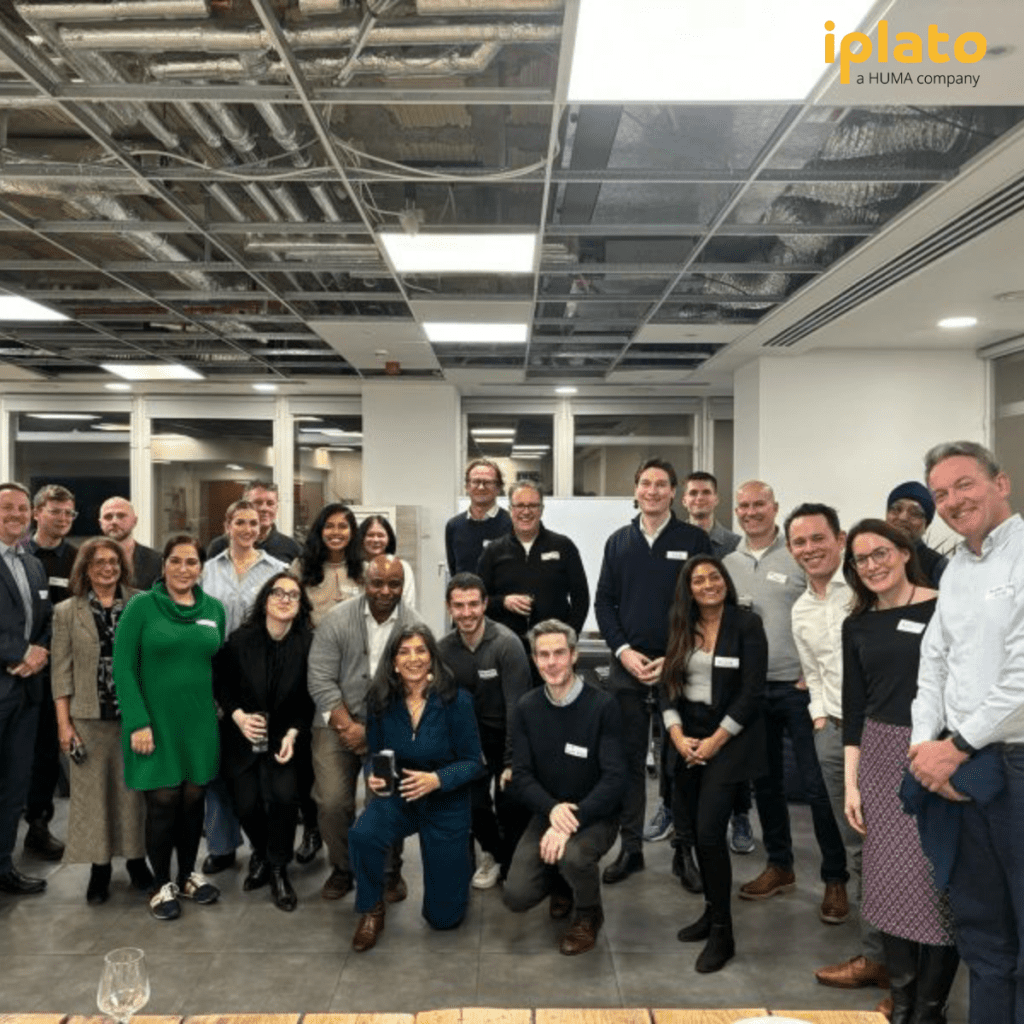
Last month an exclusive round table evening with HealthXL was hosted in the Huma office. Experts discussed the challenges in adopting and implementing digital health technologies including fragmentation across providers, difficulties in developing successful business models and the importance of learning from past mistakes and sharing knowledge to work more effectively and efficiently in the future. In attendance was iPLATO’s Innovations and Solutions Expert and qualified social worker, Janet Jadavji. Here are her key takeaways:
My journey from a qualified social worker to my current role at iPLATO Healthcare has offered me a unique perspective on the evolution of digital health, particularly in navigating the complexities of healthcare delivery in the UK.
Challenges and opportunities in digital health
Throughout the discussion, it became clear that the digital health sector is continually adapting to both persistent and emerging challenges. From my perspective, the fragmentation across providers and the intricacies of reimbursement systems poses significant barriers to unified healthcare delivery. This is compounded by a slow economic climate and the challenges of developing sustainable business models. My experience in social work, focusing on holistic and integrated care, echoes the critical need for cross-sector collaboration to address these issues.
Reflecting on lessons learned
The reflections in 2023 brought to light several key lessons that resonate with my social care background. The importance of listening to healthcare providers and engaging in a continuous feedback loop is something I’ve always advocated for. This approach is fundamental to creating digital health solutions that are not only effective but also responsive to the real-world needs of both providers and patients. Moreover, the emphasis on demonstrating impact, navigating reimbursement challenges, and the potential of workflow automation speak to the broader goals of enhancing efficiency and patient outcomes in healthcare.
Identifying new buyers and revitalising the sector
The discussion on new buyers in digital health and strategies for revitalisation was particularly enlightening. As someone passionate about patient-centred care, the shift towards direct-to-consumer models and the concept of hospital-at-home aligns with my beliefs in accessible and personalised healthcare, something we strive to achieve in iPLATO. Moreover, the focus on aligning digital health solutions with national government priorities and the growing interest from insurance companies underline the importance of scalable, sustainable, and differentiated health services.
The insights gained from the experts at the roundtable reinforce my belief in the potential of digital health to transform healthcare delivery. However, it also highlights the necessity of a collaborative and informed approach to navigate the complexities of this evolving landscape. As we move forward, the lessons from 2023 will be invaluable in shaping strategies that not only address the challenges but also harness the opportunities to revitalise the digital health sector for the benefit of all stakeholders involved.
© 2026 iPLATO. All rights reserved