
/
Making skin health accessible for all: unveiling the challenges in diagnosing skin conditions on darker skin
Feline’ Embarrassed?
January 18, 2021
The skin is the largest organ of the human body and acts as a protective barrier between the external environment and the inside of the body, shielding the internal organs against heat, light, injury and infection. Yet, the journey to diagnose skin conditions, especially on darker skin tones, can be challenging and not well mapped. In a recent study, physicians were presented with 364 images spanning 46 skin diseases and asked to submit up to four differential diagnoses. The physicians were four percentage points less accurate for the diagnosis of images of dark skin as compared to light skin.
Inherent biases deeply rooted in medical research, literature, and education have led to a healthcare landscape skewed towards lighter skin, often leaving behind those with darker complexions. Doctors diagnose around one-quarter of melanoma cases in Black people when cancer has already spread to nearby lymph nodes. However, amidst these challenges, there are technological advancements, such as AI, that are helping to rectify this imbalance. In May 2024, Autoderm conducted a total of 18,359 analyses through the myGP app and identified 79 cases of melanoma. This equates to about 2-3 melanoma diagnoses per day. Given that approximately 46 melanomas are diagnosed daily across the UK, the cases detected via the myGP app represent about 5% of the total daily melanoma diagnoses in the UK population.
We recognise the need for equitable healthcare solutions for all. Through our partnership with Autoderm, launched in 2023 after years of clinical and AI research, are proud to offer their next generation skin scanner to our community of 3 million users via the myGP app.
The bias in dermatology towards lighter skin tones is a well-documented issue. From medical textbooks to research studies, most visual references and diagnostic criteria are based on observations of mainly fair-skinned individuals.This bias perpetuates a cycle of misdiagnosis and inadequate treatment for patients with darker skin, which can lead to unnecessary distress and prolonged health issues such as increased itching, dryness, skin thickening and hyperpigmentation.
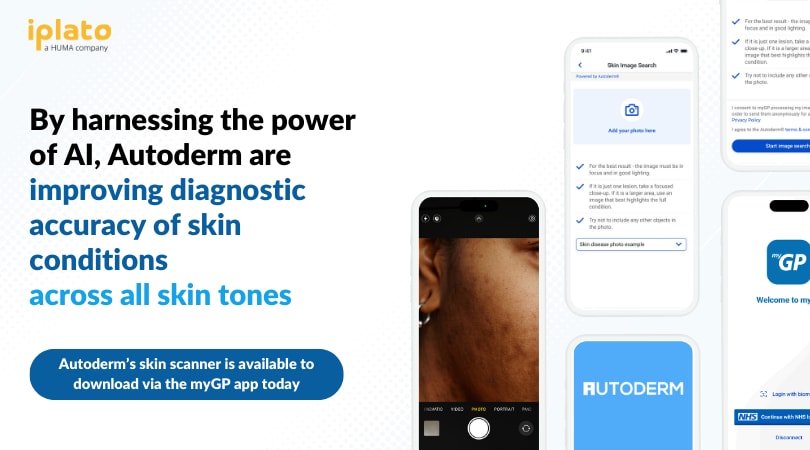
Autoderm and the myGP app, however, are changing the game! By harnessing the power of AI, Autoderm helps improve diagnostic accuracy of skin conditions across all skin tones. Their approach analyses a diverse search engine of skin images (2 million+), encompassing various ethnicities and skin tones. Their algorithm is constantly evolving and learning along with their growing bank of images. Irrespective of skin tone, myGP users can use the tech to get likely answers quickly, easily and choose how to act on the insight.


© 2026 iPLATO. All rights reserved
Practice Area
/
Making skin health accessible for all: unveiling the challenges in diagnosing skin conditions on darker skin
Feline’ Embarrassed?
January 18, 2021
The skin is the largest organ of the human body and acts as a protective barrier between the external environment and the inside of the body, shielding the internal organs against heat, light, injury and infection. Yet, the journey to diagnose skin conditions, especially on darker skin tones, can be challenging and not well mapped. In a recent study, physicians were presented with 364 images spanning 46 skin diseases and asked to submit up to four differential diagnoses. The physicians were four percentage points less accurate for the diagnosis of images of dark skin as compared to light skin.
Inherent biases deeply rooted in medical research, literature, and education have led to a healthcare landscape skewed towards lighter skin, often leaving behind those with darker complexions. Doctors diagnose around one-quarter of melanoma cases in Black people when cancer has already spread to nearby lymph nodes. However, amidst these challenges, there are technological advancements, such as AI, that are helping to rectify this imbalance. In May 2024, Autoderm conducted a total of 18,359 analyses through the myGP app and identified 79 cases of melanoma. This equates to about 2-3 melanoma diagnoses per day. Given that approximately 46 melanomas are diagnosed daily across the UK, the cases detected via the myGP app represent about 5% of the total daily melanoma diagnoses in the UK population.
We recognise the need for equitable healthcare solutions for all. Through our partnership with Autoderm, launched in 2023 after years of clinical and AI research, are proud to offer their next generation skin scanner to our community of 3 million users via the myGP app.
The bias in dermatology towards lighter skin tones is a well-documented issue. From medical textbooks to research studies, most visual references and diagnostic criteria are based on observations of mainly fair-skinned individuals.This bias perpetuates a cycle of misdiagnosis and inadequate treatment for patients with darker skin, which can lead to unnecessary distress and prolonged health issues such as increased itching, dryness, skin thickening and hyperpigmentation.
Autoderm and the myGP app, however, are changing the game! By harnessing the power of AI, Autoderm helps improve diagnostic accuracy of skin conditions across all skin tones. Their approach analyses a diverse search engine of skin images (2 million+), encompassing various ethnicities and skin tones. Their algorithm is constantly evolving and learning along with their growing bank of images. Irrespective of skin tone, myGP users can use the tech to get likely answers quickly, easily and choose how to act on the insight.
© 2026 iPLATO. All rights reserved
Feline’ Embarrassed?
January 18, 2021
Bushy, bare, or half-way there?
A new national campaign uses cat pictures to encourage women to embrace their ‘lockdown look’ and attend life-saving cervical screenings
- Almost 3 in 5 women who rely on professional waxing services admit to putting off attending their cervical screening appointment due to not being ‘perfectly preened’ (57%)
- Well over half of women who rely on beauty salons admit to missing their cervical screening appointment, even before the pandemic
- The pandemic has worsened the ‘vanity over health’ danger zone, with the majority of ‘professionally waxed’ women saying they haven’t been able to get an appointment during the pandemic (92%)
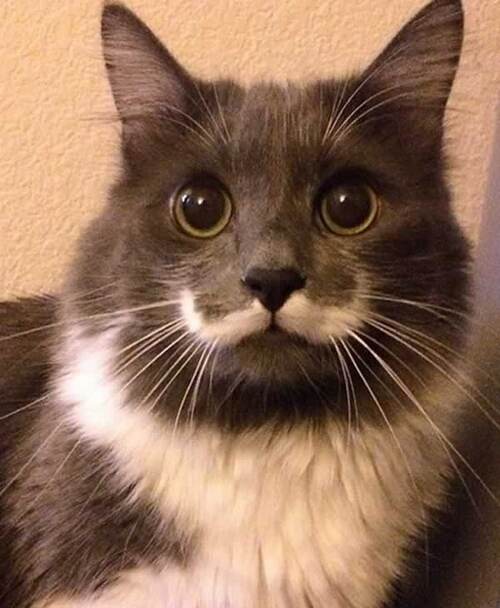
A new tongue-in-cheek cervical cancer awareness campaign has been launched today, which invites women to post a picture of a cat that best represents their current ‘lady garden’ using the hashtag #myCat, in an attempt to reduce the embarrassment factor, and promote the fact that ‘any lockdown look’ is welcome.
The campaign has been launched by myGP – the healthcare management app that two million NHS patients use to book their GP appointments – after its new research revealed that 57 percent of women who contribute to the £8bn that is spent on beauty treatments in the UK[1] – would put off attending their cervical screening appointment if they hadn’t had a professional wax.
With 92 percent of women unable to get a beauty salon appointment as a result of lockdown restrictions, potentially thousands of women will avoid their cervical screening out of embarrassment of their ‘lockdown look’.
Out of the group of UK-based women who regularly opt for a salon wax, 56 percent admit to missing their cervical screening appointment, even before the pandemic.
Hillary Cannon, Chief Marketing Officer at myGP and three times cancer survivor, comments on why cute cat pictures can save lives:
“The spoonful of sugar impact of comedy-led health campaigns is really powerful, hence us using one of the Internet’s favourite talking points – cats.
“The campaign’s cheeky ‘Bushy, bare or half-way there?’ messaging allows the discussion of a serious issue under the veil of laughter, which makes it easier for everyone to participate. Most importantly, the campaign reinforces the message that there is no ‘normal’ and there is nothing to be embarrassed about when it comes to your health, or to the way your body looks.
Harriet Leyland, Clinical Advisor at myGP, comments on why delaying or cancelling a cervical screening appointment can mean the difference between life and death:
“Early detection and diagnosis of precancerous cells or cervical cancer has a significant impact on an individual’s chances of successful treatment.
Many women believe that a cervical screening is checking for cancer, but what it actually is doing is screening for the human papilloma virus (HPV) which is associated with the vast majority of cases of cervical cancer. If HPV is detected, further screening of cells for abnormalities which can develop into cervical cancer is done. We are hoping that this fun and cheeky campaign can help to educate and encourage the one in three women who miss their cervical screening, for whatever reason, to attend.
“Cervical screening prevents 75 percent of cervical cancers, so our message to the hundreds of thousands of women who will avoid their smear test due to appearance concerns, is that it’s far too dangerous to delay attendance.”
Dr Yasmin Razak, a London-based GP and a member of myGP’s GP advisory panel comments on the prioritisation of cervical screenings across the NHS:
“All clinical work since the start of the pandemic is about saving lives. Our Practice Nurses’ focus is currently limited to baby immunisations cervical screenings – the essential services. This goes a long way in demonstrating the importance of cervical screenings to the health of the nation.”
Beth Dunlavey, reality TV star and social influencer, comments on why her ‘abnormal’ result from a cancer screening aged 25 triggered her use of social media to communicate the importance of attending screenings amongst digital natives:
“If I had missed my cervical screening when I was 25, I may not be here today, making this campaign especially important for me.
“Far too often we are seeing women take the ‘appearance-first, health-second’ approach, and social media plays a big role in that. That’s what makes this campaign so powerful – it uses a light-hearted, fun subject matter to start potentially life-saving conversations.”
To find out more about the #mycat campaign or to share your cat picture, visit https://www.mygp.com/mycat
The #mycat campaign is part of myGP’s ongoing ‘Remind Us’ campaign, which is calling for Government to centralise all cancer screening SMS reminders in the interest of getting 780,000 more people to attend their their appointments, each year[2]. To find out more about the campaign, visit mygp.com/remind-us.
-ENDS-
For more information, please contact Lisa@sensecommunications.co.uk or call 07525 204402.
Research methodology
myGP commissioned a poll of 500 women aged 25-65 who regularly attend a beauty salon for professional hair removal on 13-15 January 2020, via 3Gem research.
About iPLATO’s ‘myGP’ app
- Created by healthtech company iPLATO Healthcare, myGP is the UK’s largest independent healthcare management app with over two million NHS patient users, and 6,500 medical practices right across the country using the app / platform.
- The myGP app was created to give NHS patients improved, and more convenient access to healthcare. By making all services available in one app, users can manage and navigate their own healthcare quickly and efficiently, whilst seeing all the options available to them of which they may not have previously been aware.
myGP is the health app of choice for over two million NHS patients. Its most popular patient features include:
- Booking appointments – Get access to health professionals at the tap of a button, including GPs, practice nurses, or other relevant and available health experts. No need to call and speak to a receptionist – it can all be managed privately, in-app.
- Access medical records – Depending on the computer system your practice uses, you will be able to access GP medical records online.
- Request repeat prescriptions – Putting an end to writing a letter or completing a form at the practice, patients can request repeat prescription in seconds, in-app for click-and-collect at the chosen high street pharmacy of for home deliver (popular during the pandemic)
- Helping others access healthcare – Parents have registered hundreds of thousands of dependents that they help access the healthcare they need.
- Access to triage and remote consultation services – myGP allows patients to access online consultation services (triage and video consultation) from within the app or provided by NHS approved providers such as eConsult and DoctorLink.
- Medication reminders – A handy tool to remind patients to take the required medication at the correct, regular intervals.
- Weight and blood pressure monitoring – a simple tracker for weight and blood pressure, helping people keep an eye on their physical health, and BMI.
[1] British Beauty Council – The Value of Beauty Report, 2018
[2] https://www.england.nhs.uk/wp-content/uploads/2019/02/report-of-the-independent-review-of-adult-screening-programme-in-england.pdf (Of the 10 million attendances each year, 10,000 lives are saved – that’s 1% who are found to have an abnormality.)
© 2026 iPLATO. All rights reserved